Take the next step as a diver

Build the skills for the dives you love

Specialty courses focus your training on one part of diving and turn experience into reliable skill. Choose wreck exploration, precise buoyancy, recreational deep diving or confident drift diving in the warm Caribbean Sea.

We plan the training around your certification, experience and goals. Small groups and personal feedback give you time to understand the techniques, practise them properly and apply them during real dives from Bayahibe.

  • Four focused specialty options
  • Two or four training dives, depending on the course
  • eLearning and certification
  • Maximum four divers per instructor
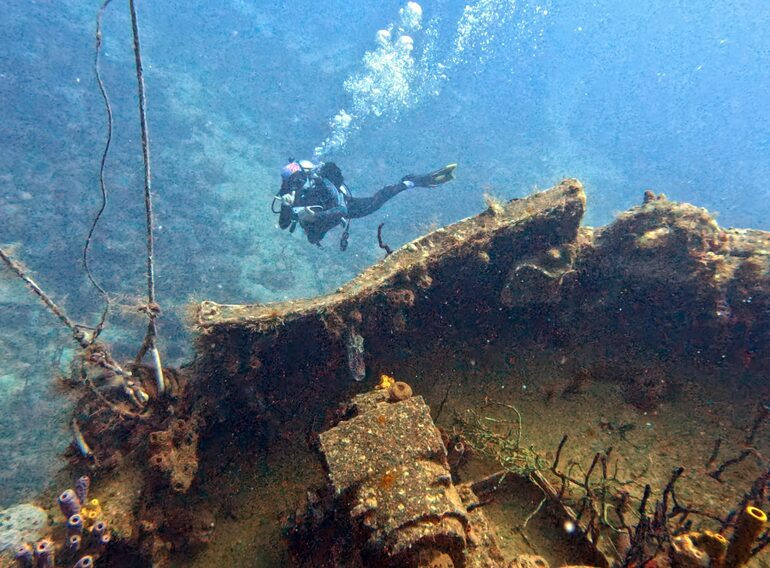
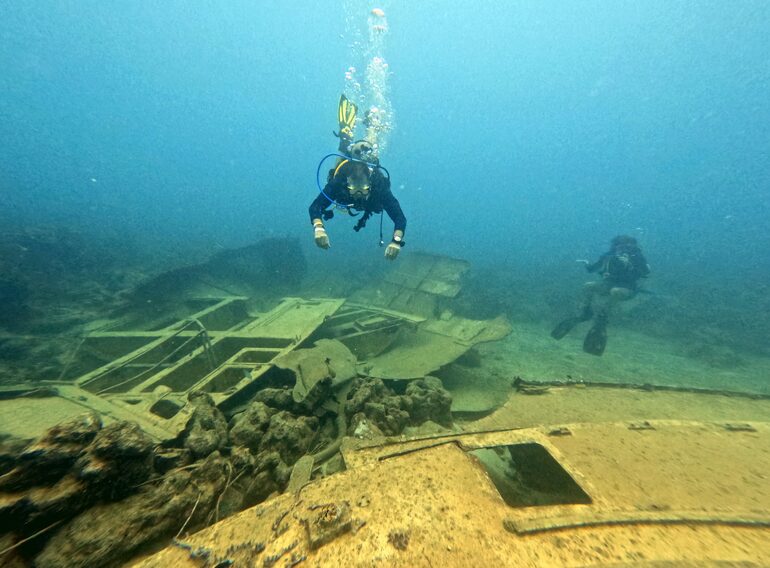
Divers exploring a Caribbean wreck during scuba specialty training from Bayahibe

Your specialty training at a glance

Focused courses with real Caribbean dives

Certified diversOpen Water or Adventure Diver, depending on the specialty
2–4 training divesThe required number of dives depends on your chosen course
eLearning includedComplete the theory before or around the practical training
Small groupsPersonal coaching with no more than four divers per instructor
Not sure which one to choose?

Start with your diving goals

  • Better control and lower air use: Buoyancy
  • Explore shipwrecks responsibly: Wreck
  • Prepare for dives below 30 metres: Deep
  • Move safely with ocean currents: Drift
  • Combine compatible training when practical

Tell us what you want to improve and where you plan to dive next. We will recommend the most useful specialty and confirm the prerequisites.

Compare the specialties

Four ways to become a stronger diver

Choose your specialty course

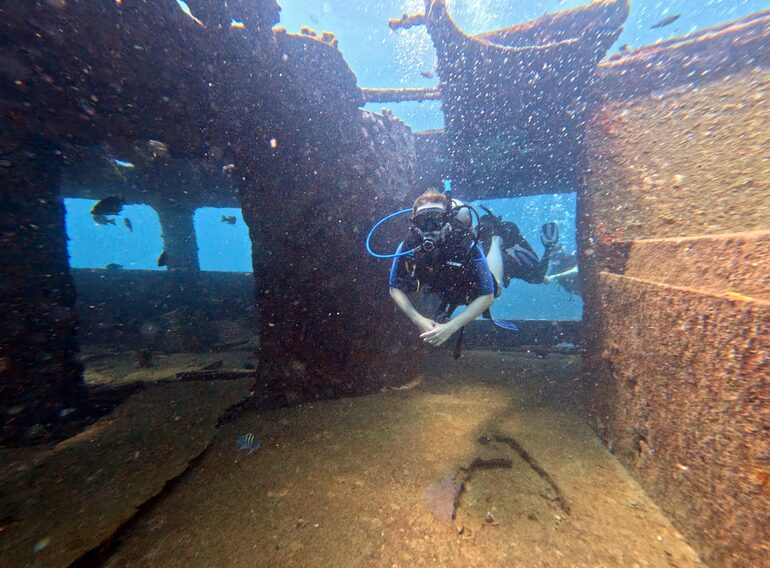
Diver exploring the interior structure of a Caribbean shipwreck during wreck training

Wreck Diver

Four dives · Adventure Diver · Minimum age 15. Learn wreck research, survey and mapping, navigation, responsible exploration, line and reel techniques, and conservative procedures around overhead hazards. Any penetration exercise depends on the site, conditions and instructor judgment.

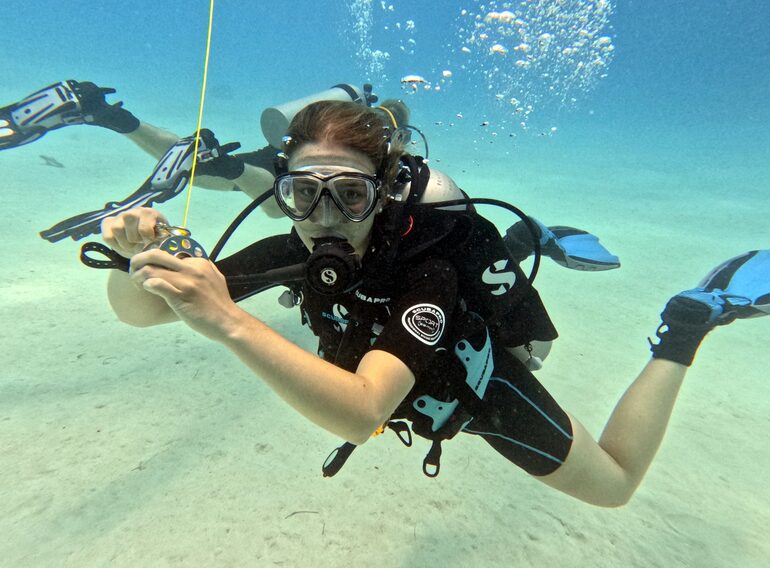
Diver practising horizontal trim and controlled movement during buoyancy training

Peak Performance Buoyancy

Two dives · Open Water Diver · Minimum age 10. Fine-tune weighting, trim, streamlining, breathing control, hovering and efficient movement. Better buoyancy can reduce effort and air use while helping you protect reefs and enjoy calmer dives.

Diver maintaining controlled buoyancy above a wreck during recreational deep-diving training

Deep Diver

Four dives · Adventure Diver · Minimum age 15. Develop progressive recreational deep-dive planning, gas management, narcosis awareness, buddy contact, buoyancy and emergency procedures, with course dives planned within standards up to 40 metres.

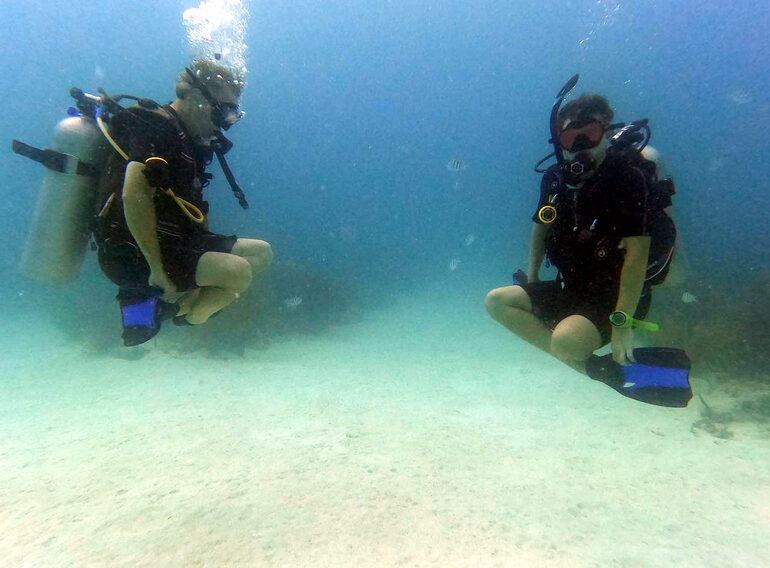
Two divers practising stable buddy positioning and control before drift-diving training

Drift Diver

Two dives · Open Water Diver · Minimum age 12. Learn current awareness, entries and exits, buoyancy, navigation, communication, buddy contact and the use of floats, lines or surface markers while moving safely with the water.

Simple planning, focused training

How your specialty course works

01Choose

Select your goal

Tell us which specialty interests you, or describe the type of diving and skill you want to improve.

02Confirm

Check prerequisites

We review your age, certification, recent experience, preferred dates and equipment needs before confirming the plan.

03Prepare

Complete the theory

Work through the specialty eLearning so the practical time can focus on planning, demonstrations and underwater skill development.

04Dive

Apply the skills

Complete the required training dives with personal coaching, feedback and course-specific performance requirements.

Plan the right course for your experience

Inclusions, prerequisites and scheduling

Your specialty training can include

  • Course-specific eLearning and certification
  • Two or four required training dives
  • Instructor briefings, demonstrations and feedback
  • Tanks, weights and standard scuba equipment
  • Water, Coca-Cola, pineapple and biscuits on the boat
  • Transfer planning from Punta Cana or Bávaro

Send us for your quotation

  • The specialty course you want
  • Your preferred dates and hotel
  • Your age and certification level
  • Your logged dives and last dive date
  • Your height, weight and shoe size
  • Your equipment and Nitrox requirements

Prerequisites vary by specialty

Peak Performance Buoyancy is available to Open Water Divers from age 10. Drift Diver is available to Open Water Divers from age 12. Wreck Diver and Deep Diver require Adventure Diver or a qualifying certification and a minimum age of 15.

Junior-diver depth and supervision limits always apply. We confirm your eligibility before registration and adjust every training plan to certification, experience and conditions.

Price, sites and timing

Price is on request. Each specialty requires different learning materials, dives, sites and logistics. Some courses can be completed over one practical day; four-dive specialties normally require more than one day.

Site selection depends on the specialty and sea conditions. After multiple dives, plan at least 18 hours between your final dive and flying.

Important: Specialty training develops skills within recreational limits. It never replaces conservative dive planning, current conditions, good judgment or the additional training required for technical, cave or unrestricted overhead diving.

Choose your next course with confidence

Specialty Course FAQs

Which specialty courses do you offer?

Our main specialty options are Wreck Diver, Peak Performance Buoyancy, Deep Diver and Drift Diver. Availability depends on your certification, age, experience, dates and sea conditions.

How much does a specialty course cost?

Price is on request because each specialty has different learning materials, required dives, sites and logistics. Tell us the course and dates you want, and we will send a clear quotation.

How many training dives are included?

Peak Performance Buoyancy and Drift Diver each require two dives. Wreck Diver and Deep Diver each require four dives.

Which specialty is best for a newer diver?

Peak Performance Buoyancy is an excellent first specialty. Better weighting, trim, hovering and efficient movement improve comfort, air use and control on nearly every future dive.

Can specialty dives count toward Advanced Open Water?

In many cases the first specialty dive may count as an Adventure Dive toward Advanced Open Water, or a completed Adventure Dive may credit toward the matching specialty. We confirm the correct training credit before registration.

Does Wreck Diver mean I can enter any wreck?

No. The course teaches assessment, survey, mapping, navigation, line and reel use and conservative procedures. Any penetration exercise depends on the wreck, conditions, objectives and instructor judgment, and does not authorize unrestricted overhead diving.

How deep is the Deep Diver course?

The four dives progress within recreational standards and your experience, with a maximum training depth of 40 metres or 130 feet. Depth is never the only goal; planning, gas, buoyancy, buddy contact and narcosis awareness are central.

Can equipment and transfers be included?

Standard scuba equipment and transfer from Punta Cana or Bávaro can be included when required. Tell us what you have, what you need and where you are staying so the quotation is exact.

How do I reserve?

Send the specialty, preferred dates, hotel, age, certification, logged dives, last dive date and equipment needs by WhatsApp. We confirm the prerequisites, schedule, exact inclusions, price and required deposit.

Ready to choose your next specialty?

Send your preferred course, dates, certification, logged dives and hotel. We will confirm the right training plan, availability and exact price.

Request Specialty Training

© 2015–2026 Ultra Marine Divers

Ask about Specialties