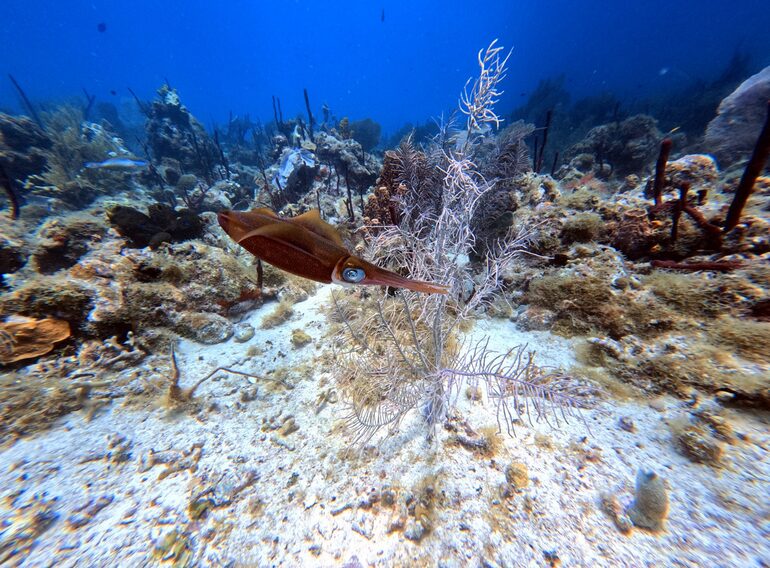
Color & communication
Caribbean Reef Squid
Reef squid can change color and pattern while hovering with remarkable control. Slow movements give a group the best chance to watch without sending them away.


Real encounters on real Caribbean dives
We collect our guests from Punta Cana and Bávaro, then travel to the Caribbean side of the Dominican Republic. The reefs, wrecks, seagrass and sandy areas around Bayahibe, Saona Island and Catalina Island create homes and feeding grounds for many different animals.
Some encounters are bold and obvious; others depend on a patient eye. A turtle may cruise across the seagrass, squid can hover above the reef, and an octopus or scorpionfish may disappear into its surroundings. Every dive is different, and no wild-animal sighting can ever be guaranteed.
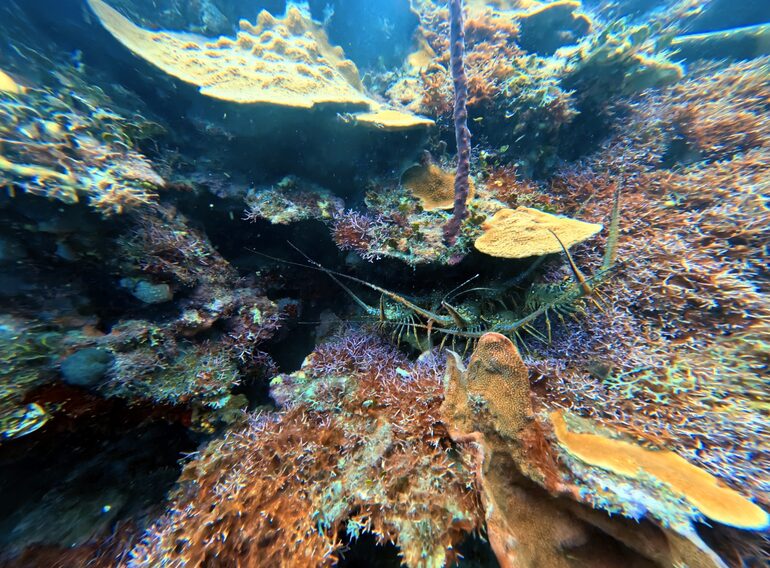
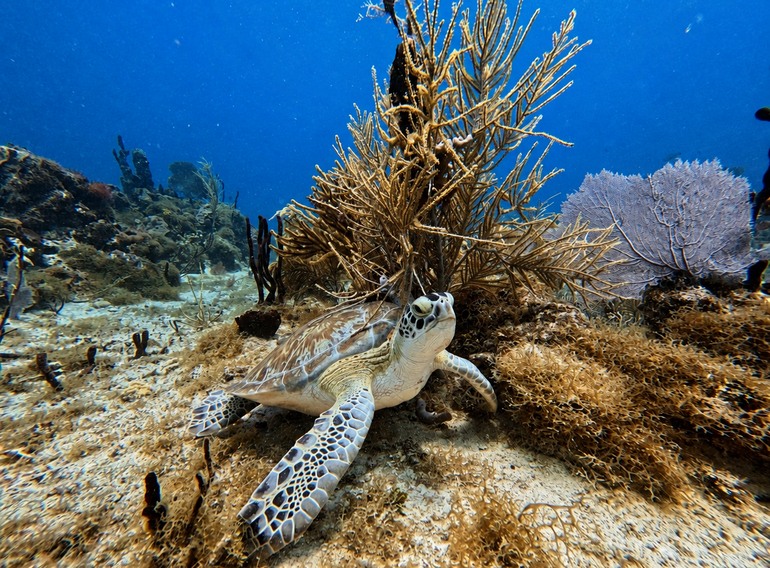
A favorite Caribbean encounter
Green sea turtles are closely connected to seagrass and algae-rich habitats. Seeing one resting, feeding or gliding across the bottom is always special—especially when the group stays calm and gives the animal room to choose its own direction.
Never block a turtle’s route to the surface. Keep a respectful distance, move slowly and let the encounter belong to the animal.
Intelligent, curious and full of personality
Reef squid can change color and pattern while hovering with remarkable control. Slow movements give a group the best chance to watch without sending them away.
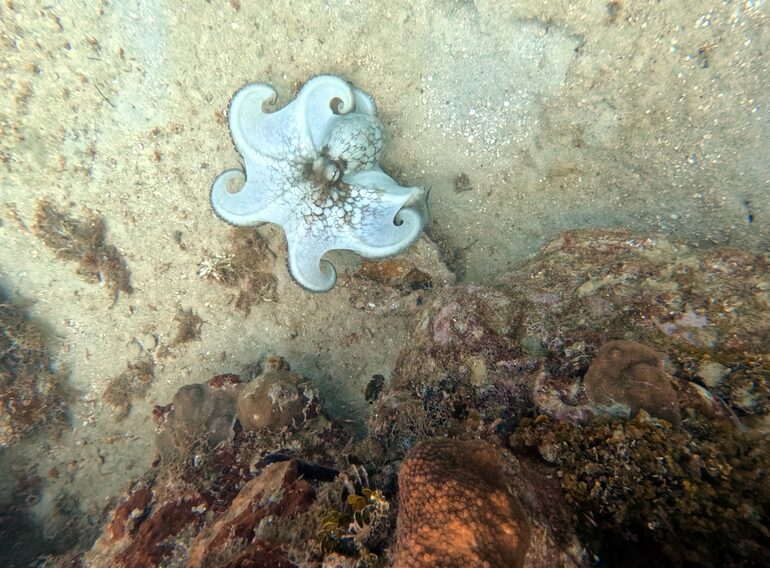
Octopus often blend into rock, coral and sand. A curled arm, a changing texture or a watchful eye may be the clue that brings the whole animal into view.
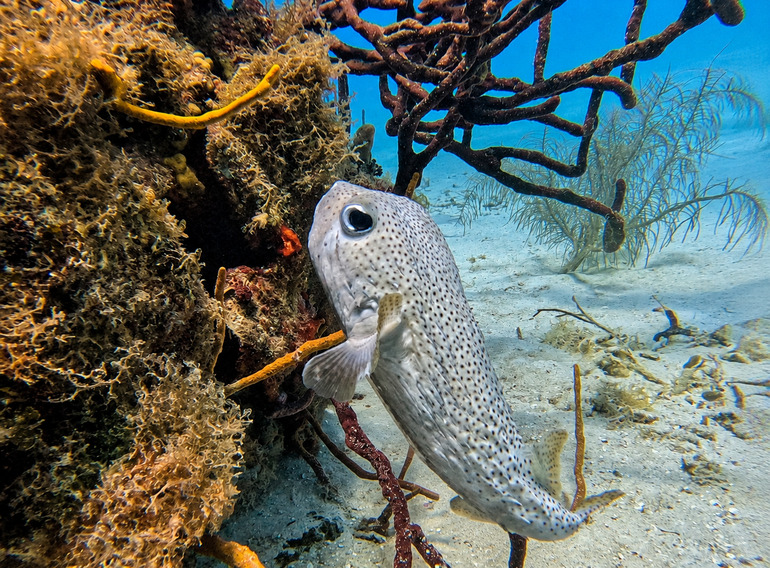
Porcupinefish often cruise close to reef structure or pause beneath a ledge. We never crowd or provoke them; their natural behavior is the best encounter.
Look into the blue—and then look closer at the reef
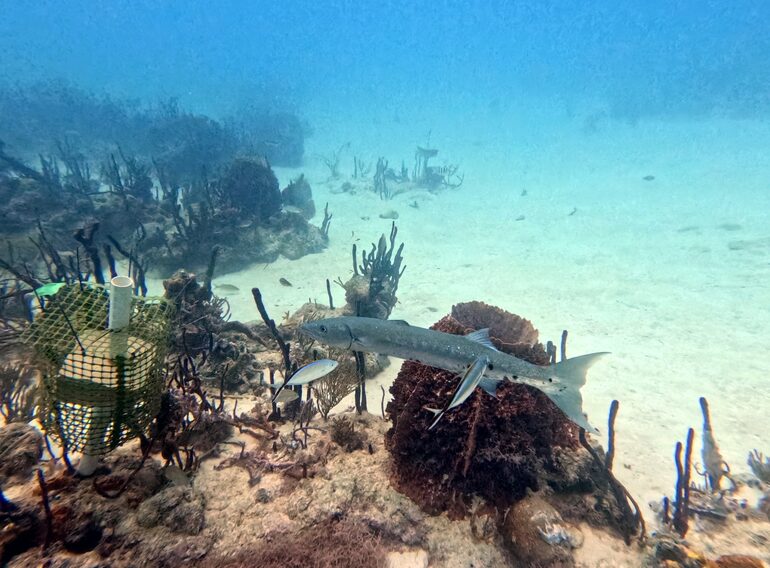
A great barracuda may hang almost motionless above the reef while a remora travels beneath it. Staying relaxed lets divers appreciate the animal’s calm, powerful presence.
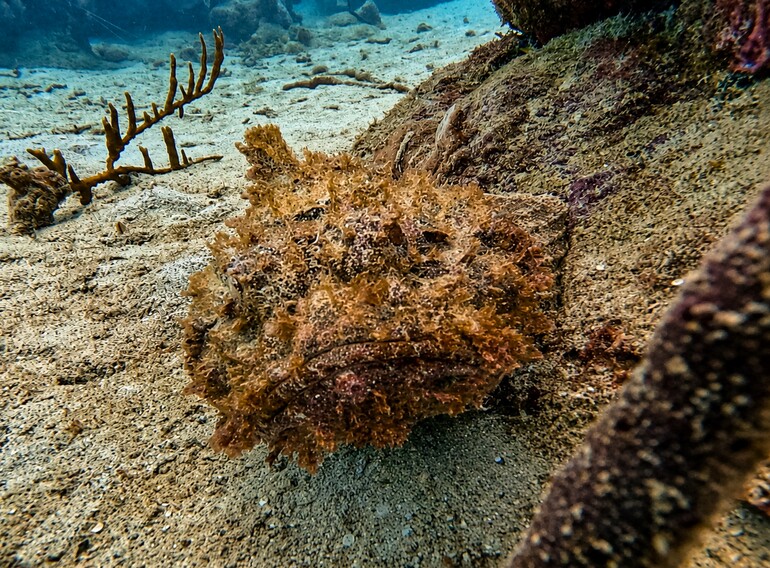
Texture and color make scorpionfish difficult to separate from the reef. This is one reason excellent buoyancy and careful hand placement matter: observe, but never touch.
The reef is more than one animal
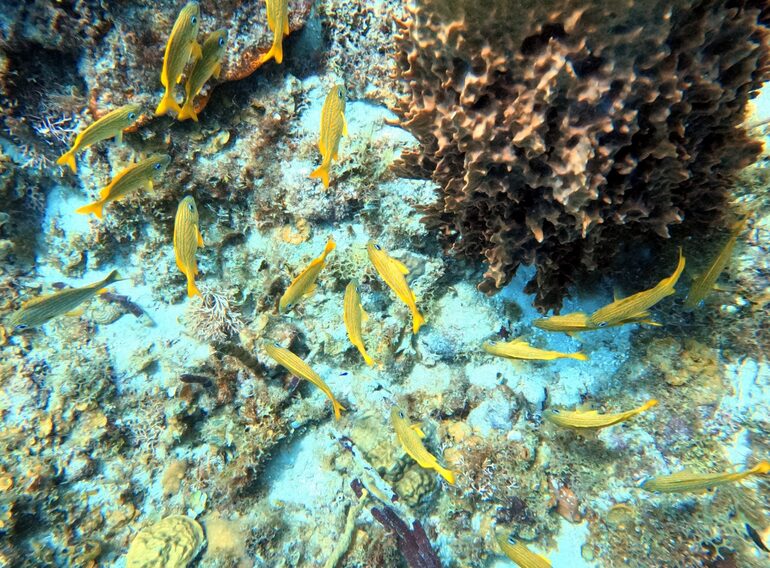
Schools of reef fish can turn a coral head into a moving cloud of yellow. Corals, sponges and sea fans create shelter, feeding areas and the intricate textures that make Caribbean diving so rewarding.
Many of the best moments are not rare sightings. They are the full scene: sunlight, clear water, small fish moving together and a healthy respect for the living reef beneath us.
Different habitats, different possibilities
Reefs, shallow wrecks, sandy areas and seagrass make Bayahibe a varied half-day choice for beginners and certified divers.
Explore Bayahibe divingA full Caribbean day combining two dives with lunch, beach time and the Natural Pool, following our regular island schedule.
Explore Saona IslandThe Wall and Aquarium bring dramatic reef structure, open-water views and colorful Caribbean reef communities.
Explore Catalina IslandThe photographs on this page are real moments from our dives, but they are examples—not promises. Site access, visibility, conditions and animal encounters change from day to day.
Enjoy the encounter without changing it
Hands, fins, gauges and cameras stay away from animals, coral and sponges.
Let wildlife set the distance and direction. Calm divers usually enjoy longer encounters.
Feeding changes natural behavior and is not part of our diving experience.
Good trim protects the reef and makes quiet, close observation easier.
Bring home the memory, not the disturbance
Reduce water between the camera and subject, but stop before the animal changes behavior.
Stable buoyancy and slow breathing help you frame a cleaner image without rushing.
Keep the sun behind you when possible, and avoid firing a flash directly into an animal at very close range.
Good to know before you dive
No. Every animal on this page is wild, so sightings depend on the site, conditions and good fortune.
Yes. Discover Scuba Diving guests can join supervised Caribbean reef dives with depth and route matched to beginner limits and conditions.
No. We do not bait or feed wildlife. Our focus is natural, respectful encounters.
Bayahibe, Saona and Catalina all offer different habitats and possibilities. We recommend a trip according to experience, schedule and conditions—not a guaranteed species list.
Yes, provided you can control your buoyancy and follow the guide. First-time divers should focus on breathing, position and instructions before photography.
Yes, subject to the trip and conditions. Snorkelers and non-diving companions can join selected Bayahibe and island options when space is available.
Tell us your dates, hotel, certification level and recent diving experience. We will recommend the best available Caribbean trip for you.
Ask us on WhatsAppCompare Dive Trips